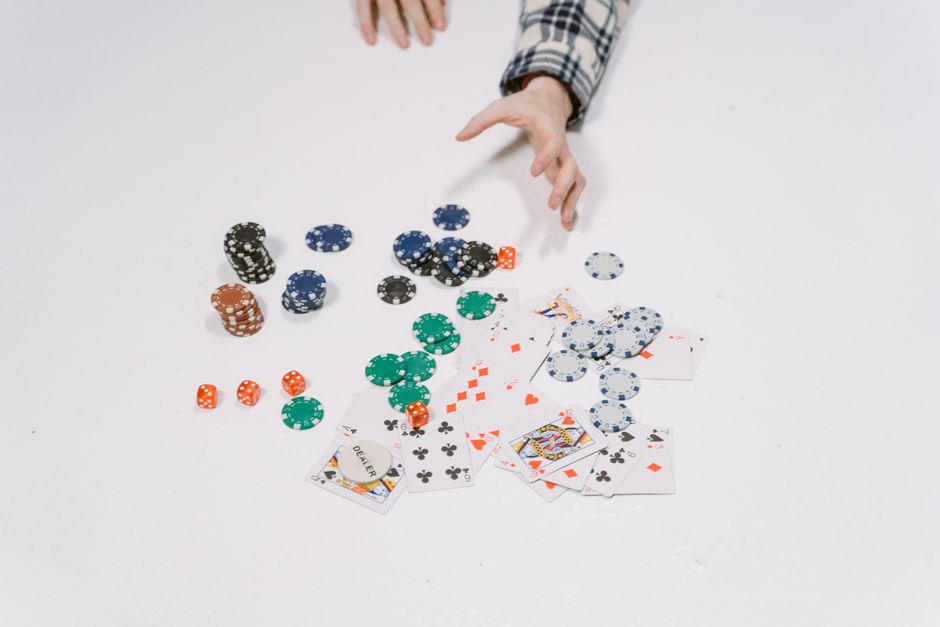
Ask ten slot players what RTP means and you'll get ten different answers, most of them wrong. Some will tell you a 96% RTP machine "pays back 96% of what you put in during a session." Others will swear that a machine is "due" after a cold streak. Both ideas fall apart the moment you actually look at how the numbers work — and understanding the real mechanics won't kill the fun, it'll just stop you from making expensive assumptions.
Let's dig into the arithmetic that sits behind every spin, because once you see it clearly, you'll spot marketing nonsense instantly.
What RTP Actually Measures
Return to Player is a theoretical percentage calculated over millions of spins, not your spins. A 96% RTP slot means that if every possible outcome occurred in perfect proportion, the machine would return 96 cents for every dollar wagered, keeping 4 cents as house edge. That's it. It says nothing about what happens in your 200-spin session on a Tuesday night.
Here's a concrete example. Take a slot with a $1 spin and 96% RTP. Over 10 million spins, total wagering hits $10,000,000 and the expected return is $9,600,000. But the variance in between is enormous. In any given 500-spin window, you could easily be up 300% or down to zero depending on the volatility profile. We found mahjong slot to be a handy reference here.
This is why two slots with identical RTP can feel completely different. A low-volatility game like Starburst (96.09%) pays small amounts frequently. A high-volatility game might sit silent for an hour and then throw a 5,000x multiplier. Same math, totally different experience.
RTP vs. House Edge vs. Volatility
These three concepts get mixed up constantly, so let's separate them cleanly.
- RTP: the long-term theoretical payback percentage (e.g., 96.5%)
- House edge: 100% minus RTP (e.g., 3.5%) — the casino's mathematical margin
- Volatility: how wildly results swing around that expected average
RTP tells you the cost of playing over an infinite timeline. Volatility tells you whether you'll survive long enough to reach that timeline. They are not the same thing, and a high-RTP high-volatility game can still bankrupt a short bankroll faster than a lower-RTP low-volatility one.
Compare this to blackjack, where basic strategy can push the house edge below 0.5%. On a slot, no skill element shrinks the 3.5%–8% edge. That gap is the price of entertainment, plain and simple.
Why Online RTP Usually Beats Land-Based
This is one of the least-advertised facts in iGaming. Online slots are typically certified at 95%–97% RTP. Land-based machines in many jurisdictions — especially older Class II or tribal terminals in the US — often run 85%–92%. The difference sounds small until you scale it.
Play 1,000 spins at $1 on a 96% online slot and you'd theoretically lose $40. Same spins on an 88% land-based cabinet, and you're down $120. That's triple the bleed for the same entertainment time. Online operators offset lower operating costs by offering better returns, and regulated markets (UK, Malta, Sweden) require published RTP testing by independent labs like eCOGRA or GLI.
Poker Rake: The Slow Leak Everyone Ignores
Poker is different because you're playing other people, not the house. But the house still gets paid, via rake. Typical online cash game rake is 5% capped at $3, though some sites now run "rakeback" schemes that return 20%–40% of what you paid.
Here's the killer: in a 6-max $1/$2 game, a casual winner might book $8/hour in profit. If the table rakes $60/hour total and you're paying $10 of it, you're actually losing money to the house faster than you're winning it back from opponents. This is why "beating rake" is the actual mountain poker players climb, not beating other players.
A quick sense of the scale
- Micro-stakes rake (5%): brutal for short-handed games
- Tournament rake (6%–10% of buy-in): folded in automatically
- Rakeback deals: can swing you from losing to winning at the margins
- No-rake sites: rare, usually invite-only, worth hunting
If two sites offer identical traffic but one gives 30% rakeback and the other gives nothing, the first is the only rational choice for anyone grinding seriously.
Betting Markets: Where Odds Actually Come From
Sportsbook margins follow a similar logic but with a twist. Bookmakers build a vig (or juice) into odds so both sides of a market are slightly underpriced. A coin-flip line that "should" be 2.00/2.00 might get posted at 1.91/1.91, giving the book a 4.5% theoretical margin.
Prop markets and exotic bets carry far higher margins — sometimes 8%–12% — because books price in uncertainty and lower liquidity. Main markets (moneyline, spread) usually carry 2%–5%. If your strategy involves longshot parlays, understand you're paying the heaviest vig in the building.
Sharp bettors track "closing line value" instead of worrying about any single bet. If you routinely bet numbers that close better than your odds, you have an edge regardless of short-term results.
Practical Takeaways You Can Use Tonight
None of this makes gambling profitable for the average player. It's supposed to be entertainment, and treating it that way keeps you sane. But if you're going to play, play smart about the math.
- Check RTP before loading a slot. Anything under 94% is a bad deal unless it's a jackpot game with huge upside.
- Match volatility to your bankroll. A $50 roll belongs on low-volatility games, not on a mega-ways monster.
- Sign up for rakeback on poker sites. It's free money that most recreational players ignore.
- Compare sportsbook margins. A 3% difference on 200 bets a month compounds fast.
- Never chase losses against a fixed house edge — the math doesn't care how frustrated you are.
The truth is that iGaming companies have spent enormous sums on behavioral research to make you forget these numbers. Free spins, flashy graphics, near-miss animations — all designed to obscure the simple arithmetic underneath. RTP is not a promise, house edge is not negotiable, and volatility is not a personality trait of the machine.
Know the math. Respect the math. Then go have a good time anyway — because the players who lose the least are always the ones who understood the rules before the first spin.